
Newborn Essentials Guide
Newborn Essentials Guide
A thoughtful starting point for the first weeks at home, with practical essentials for feeding, changing, bathing, soothing, resting and everyday family organization.
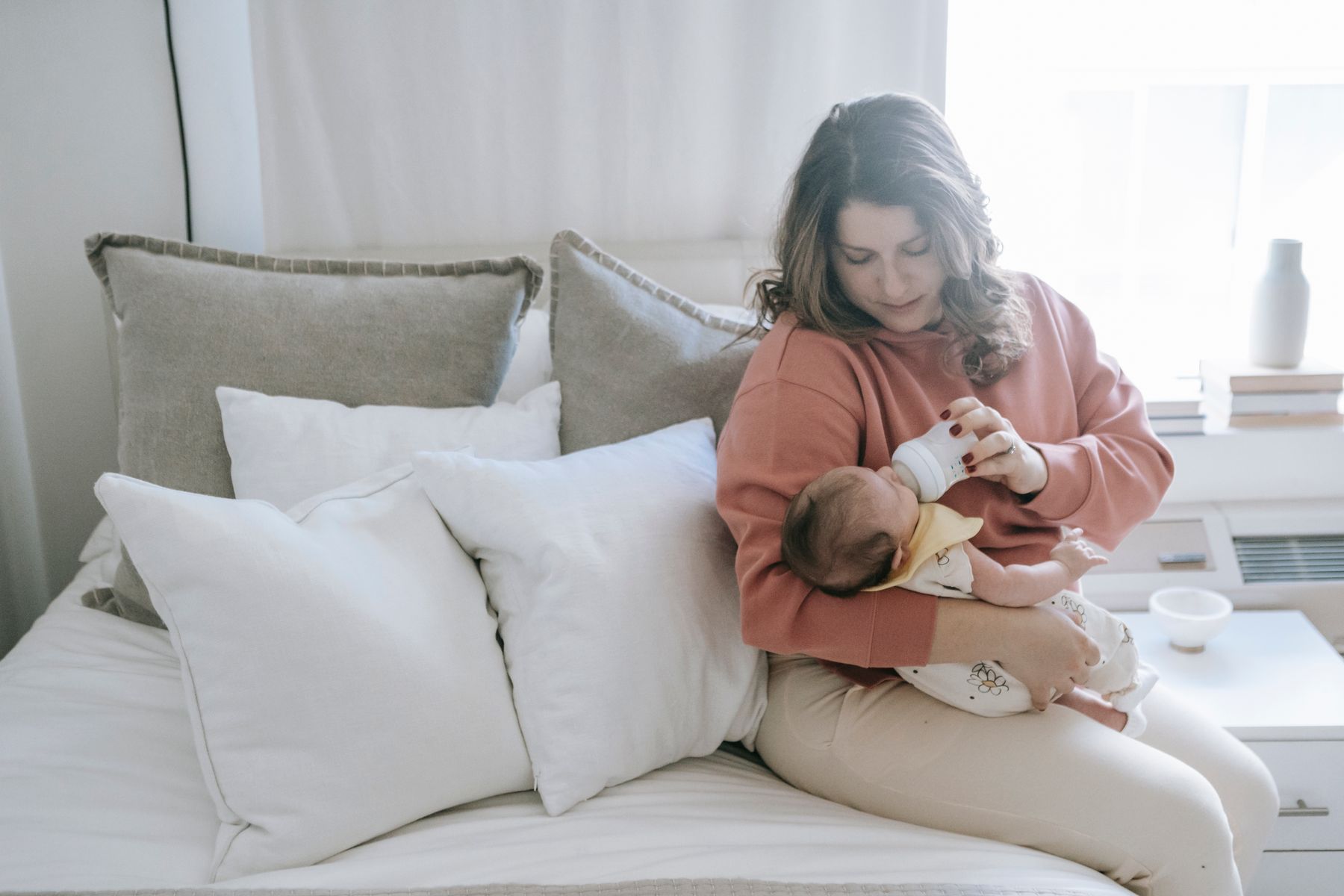
Begin with the routines you will repeat most.
Newborn preparation does not need to mean filling every shelf. Start with dependable items that support the moments happening throughout the day, then add more as your family finds its own rhythm.
Prepare for the routine
Keep frequently used essentials close to the places where feeding, changing and soothing naturally happen.
Choose flexible quantities
Begin with a practical rotation rather than a large supply, allowing room to learn which formats suit your household.
Make care easy to share
Arrange essentials clearly so another parent or caregiver can step into the routine without searching for what is needed.
Six essential areas for the early weeks.
Use these categories as a flexible planning guide. Your exact selection can reflect your space, feeding plans, daily schedule and personal preferences.
Feeding and nursing
Create an easy-to-reach setup for milk feeds, burping and the small cleanups that follow.
- Bottles and suitable accessories
- Bibs and burp cloths
- Nursing comfort accessories
- Cleaning and drying essentials
Diapering and changing
Keep the station simple, washable and arranged so the essentials remain within comfortable reach.
- Diapers and changing supplies
- Changing pad or protective mat
- Clean cloths and disposal bags
- Fresh clothing within reach
Bath and grooming
A small collection of soft, manageable accessories can help bath and grooming routines feel more organized.
- Baby bath support accessories
- Soft washcloths and towels
- Baby grooming accessories
- Fresh diaper and clothing nearby
Sleep and soothing
Build a quiet routine around suitable sleep accessories, dim lighting and familiar care moments.
- Appropriate sleepwear
- Swaddles or wearable options
- Soft lighting for night routines
- Soothing accessories used as directed
Outings and travel
Pack for the length of the outing, with a small buffer for changes, feeding and unexpected pauses.
- Diaper bag with organizers
- Portable changing accessories
- Feeding items and clean cloths
- Weather-appropriate spare layers
Comfortable floor time
Prepare a clean, supervised space for quiet interaction, visual attention and age-appropriate movement.
- Supportive play mat
- Simple sensory accessories
- Easy-to-clean soft toys
- Storage basket for quick resets

Arrange the space around the way you move.
A well-planned station reduces unnecessary searching during busy moments. Keep frequently used items visible, separate clean and used supplies, and restock when the routine is quiet.
-
1
Keep essentials within comfortable reach
Place everyday items where they can be accessed without leaving the care area.
-
2
Create a simple clean-and-used system
Use separate baskets or compartments to make resets quicker and more intuitive.
-
3
Store backups nearby
Keep the immediate surface uncluttered while maintaining a small reserve close by.
-
4
Review the setup as routines change
Move, remove or add items as your baby grows and your family learns what is useful.
Place small essentials where care naturally happens.
Instead of keeping everything in one place, create compact groups of supplies around the home. A few thoughtful stations can make shared care more straightforward.
Rest and changing
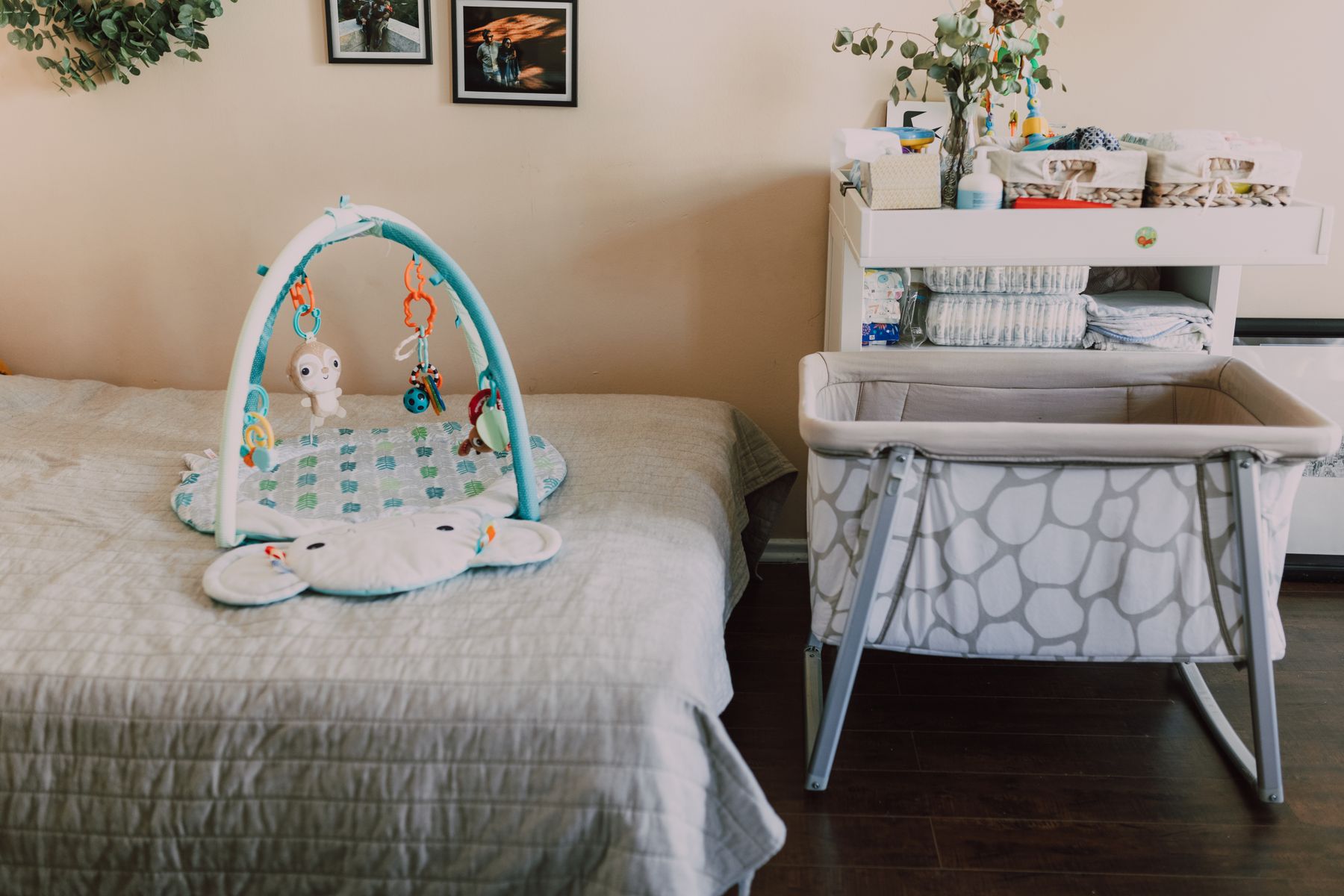
A calm central area for nighttime care, fresh clothing and everyday organization.
- Changing supplies
- Sleep accessories
- Fresh clothing
- Low-light essentials
Daytime comfort
A flexible setup for supervised floor time, soothing and parent-baby interaction.
- Play mat
- Burp cloths
- Small storage basket
- Comfortable parent support
Milk and cleanup
A tidy place for feeding accessories, clean cloths and items used throughout the day.
- Feeding accessories
- Bibs and burp cloths
- Cleaning supplies
- Drying and storage space
Outing preparation
A ready-to-go zone that keeps travel essentials together and easier to replenish.
- Packed diaper bag
- Carrier or stroller accessories
- Weather layers
- Portable feeding items
Think in moments, not a rigid timetable.
Newborn days can be wonderfully unpredictable. Organizing by recurring moments helps essentials stay useful even when the exact timing changes.
Freshen and reconnect
Prepare a clean diaper, fresh clothing and a soft cloth before beginning the first care routine.
Settle into a comfortable position
Bring feeding accessories, burp cloths and water for the parent together before getting comfortable.
Allow a quiet transition
Use calm light and familiar soothing routines while keeping the surrounding space uncluttered.
Prepare for the next moment
Restock cloths, clear used items and repack travel essentials when there is a comfortable opportunity.
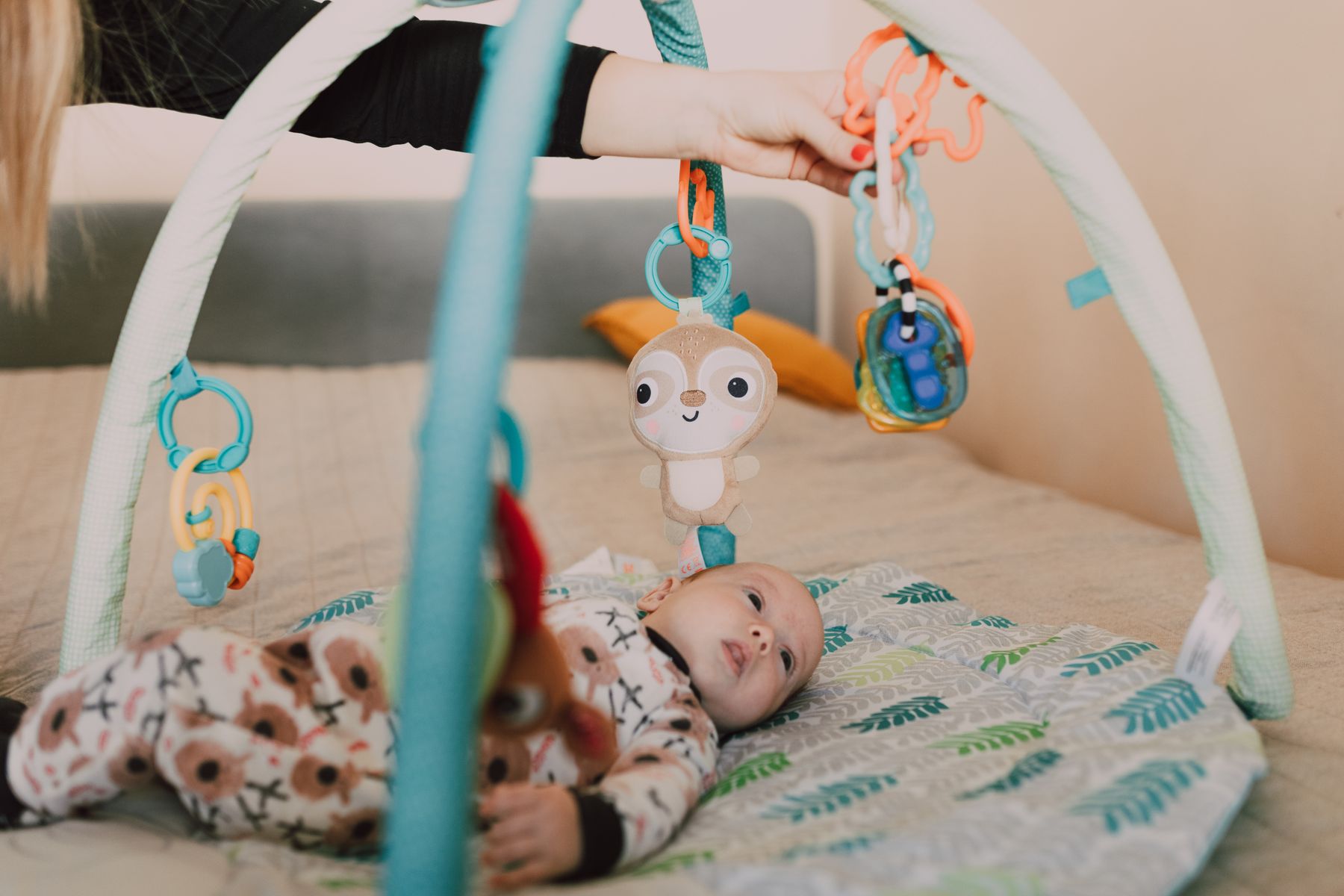
Create a comfortable space for quiet connection.
Early play can be simple: a clean mat, a familiar voice, gentle visual interest and time together. Choose a supervised area that is easy to reset between routines.
-
A
Start with an uncluttered surface
A clear area makes it easier to observe, interact and adjust the setup.
-
B
Keep accessories simple
Introduce a small number of age-appropriate items rather than filling the space.
-
C
Make cleanup part of the setup
A nearby basket helps toys, cloths and mat accessories return to their place.
Prepare in layers, not all at once.
A phased approach keeps planning manageable and leaves room for your routines to develop naturally after your baby comes home.
Set up the first-week basics
Prioritize feeding, changing, clothing, sleep accessories and a comfortable parent care area.
Wash and organize the immediate rotation
Prepare a practical group of items while keeping unopened backups stored separately.
Pack one ready-to-go outing bag
Keep a small travel kit assembled so short appointments or family outings feel easier to begin.
Add items after observing real routines
Expand your setup based on what your household reaches for, washes and replenishes most often.
A few helpful answers before you begin.
Every household prepares differently. These answers are designed to support practical planning without turning the checklist into a rigid rulebook.
How many newborn essentials should I buy before the baby arrives?
Begin with a manageable rotation for the first several days, plus a small reserve. Laundry access, storage space and feeding preferences can influence the quantity that feels practical.
Should every essential be kept in the nursery?
Not necessarily. Small care stations in the rooms you use most can reduce unnecessary trips while the nursery holds the main supply.
What belongs in a newborn outing bag?
Consider diapers, changing accessories, clean cloths, spare clothing, feeding supplies suited to your routine and practical weather layers.
How can I avoid buying items that will not be used?
Start with versatile basics and add specialized items after observing your household's habits and everyday routines.
Where can I ask Babyvora for product support?
Visit the Babyvora contact page or email info@babyvora.mom.
Build a newborn setup that feels calm, useful and personal.
Explore thoughtful mother and baby care essentials, or reach out when you need help navigating the Babyvora collection.